
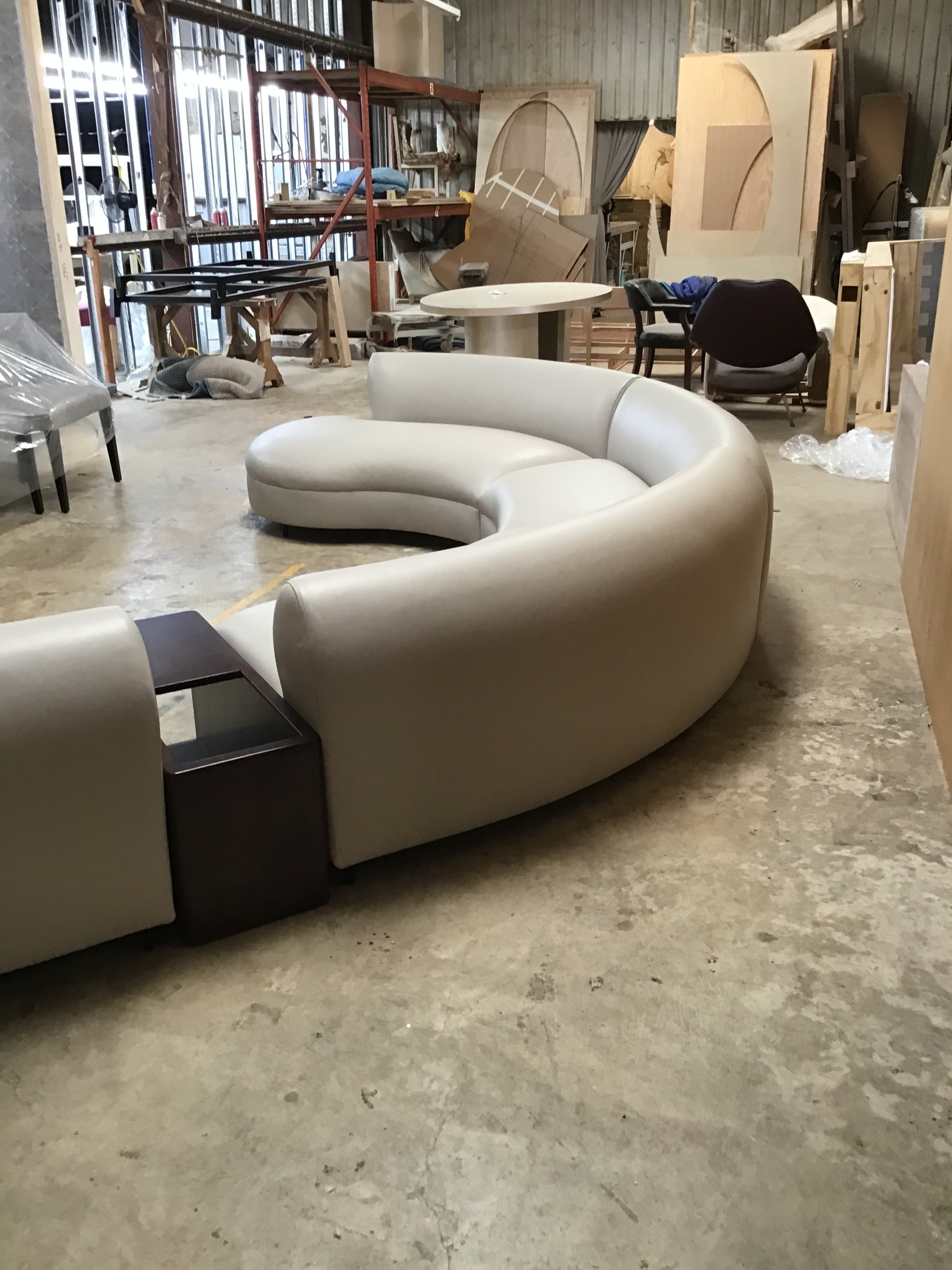
I've spent years working in textiles, rugs, and custom furniture, which means I've seen pricing from the inside out. Not just the final number a client sees in a showroom, but the actual costs behind materials, labor, fabrication, storage, and shipping. That perspective shapes how I approach sourcing today, and it's a big reason Tuquero & Co exists.
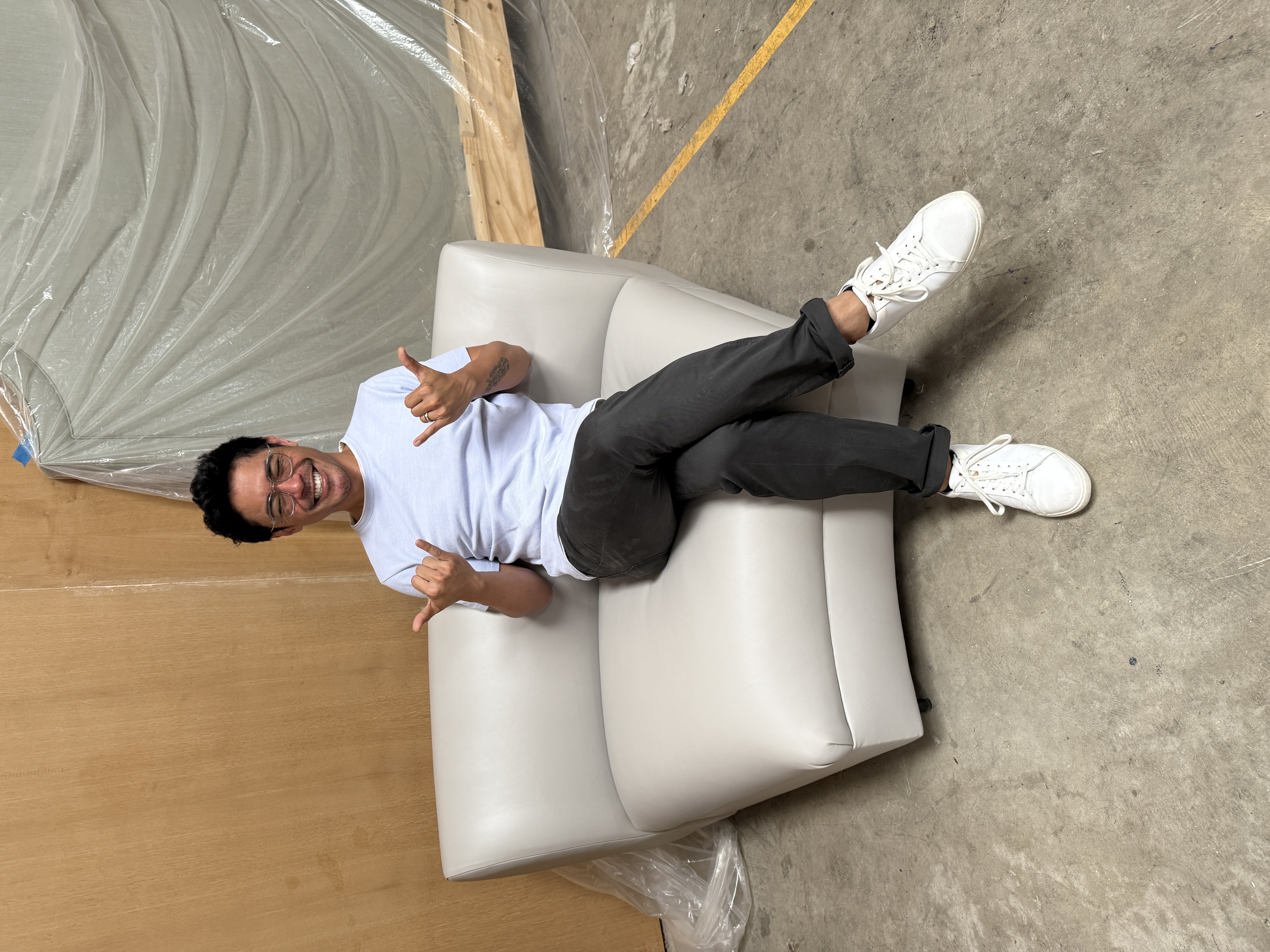
Photo: House & Town workroom, Houston
When people shop for furniture, they usually assume the retail price reflects quality alone. In reality, that number also absorbs a long chain of costs that have very little to do with how the piece was made. By the time something reaches a showroom floor or a retail website, it has often passed through multiple hands, warehouses, and systems that all need to be paid for.
From the production side
Furniture and textiles are fairly straightforward. There are raw materials like wood, foam, fiber, fabric, and finishes. There's skilled labor — the part that actually determines quality. And then there's overhead, which covers the space, equipment, and processes required to build the piece. These are real, unavoidable costs, and they're what I think of as the true cost to make.
Where prices begin to stretch is after production. Traditional retail models rely heavily on warehouse stock. Furniture often sits in warehouses or showrooms for months, sometimes longer, before it sells. Holding this stock isn't free — businesses incur carrying costs, including storage, insurance, labor, shrinkage, and capital tied up in unsold goods. These costs can represent a significant share of product value, commonly ranging from about 20% to 30% annually.¹
On top of that, furniture sold through retail usually moves through several intermediaries. A manufacturer may sell to a distributor, who sends the piece to a warehouse, which then supplies a showroom, which finally arranges delivery to the home. Each step adds handling, logistics, risk, and margin — and those costs ultimately show up in the price you pay.
This is where buying direct — and working with local workrooms — changes the equation
Workrooms are where furniture and soft goods are actually built or finished. Upholstery shops, woodworkers, and textile studios operate much closer to the source. When you work with them directly, pricing tends to reflect materials and labor far more transparently. Custom doesn't automatically mean more expensive; in many cases, it simply means you're paying for the piece itself, not for months of storage or multiple layers of handling.
There's also a level of flexibility that retail can't easily offer. Local workrooms can adjust dimensions, materials, or finishes without adding custom upcharges on top of an already inflated retail price. Pieces are typically built to order, which reduces unnecessary warehousing and shortens the path from maker to home.
Another layer that often gets overlooked
How buying pre-owned furniture eliminates middleman costs in unexpected ways. When a piece is already in circulation, the most expensive parts of the retail system have already been paid for. There's no warehouse stock accruing carrying costs, no marketing budget built into the price, and no distributor or showroom margin waiting to be recouped. The value of the piece is no longer tied to how long it has been stored or how many hands it passes through, but to its condition and usefulness right now. Recommerce — the resale of furniture — is known to offer economic and cost-saving benefits precisely because it avoids many of these traditional retail layers and lets buyers capture value that has already been "paid forward."²
In many cases, used furniture bypasses the traditional supply chain entirely. A sofa moving directly from one home to another avoids months of storage, multiple handling steps, and the layered pricing that comes with them. This is one reason buying used often feels like a great deal: you're essentially paying closer to the real value of the object itself, rather than funding all the infrastructure required to sell something new. It's also a more sustainable choice; reuse extends product life cycles, reducing waste and environmental impact.³
Logistics matter here too, especially when furnishing an island like Maui. Fewer stops and fewer handoffs mean fewer opportunities for cost to creep in. Shipping direct from a maker, consolidating shipments, or thoughtfully moving pre-owned pieces can make a meaningful difference, both financially and practically.
This approach isn't about cutting corners or rejecting showrooms altogether. It's about understanding where costs come from and deciding which ones are worth paying for. When you know how much things cost to make, how retail systems add layers over time, and how direct sourcing, workrooms, and reuse operate, you can make smarter choices — choices that prioritize quality, transparency, and value.
That's the lens I bring to Tuquero & Co. My role isn't just to source furniture, but to help clients understand the path a piece takes before it reaches their home — and how to shorten that path when it makes sense. Fewer middlemen, fewer hidden costs, and more intention behind every decision.
Sources & Further Reading
- ¹ Shopify. Carrying Costs: What They Are and How to Calculate Them. Read source
- ² Divine Consign. Discovering the Financial Perks: How Furniture Re-Commerce Benefits Budget-Conscious Consumers. https://divineconsign.com/discovering-the-financial-perks-how-furniture-re-commerce-benefits-budget-conscious-consumers/
- ³ Reperch. Why Second-Hand Furniture Is the Sustainable Choice. https://reperch.com/blog/why-second-hand-furniture-is-the-sustainable-choice