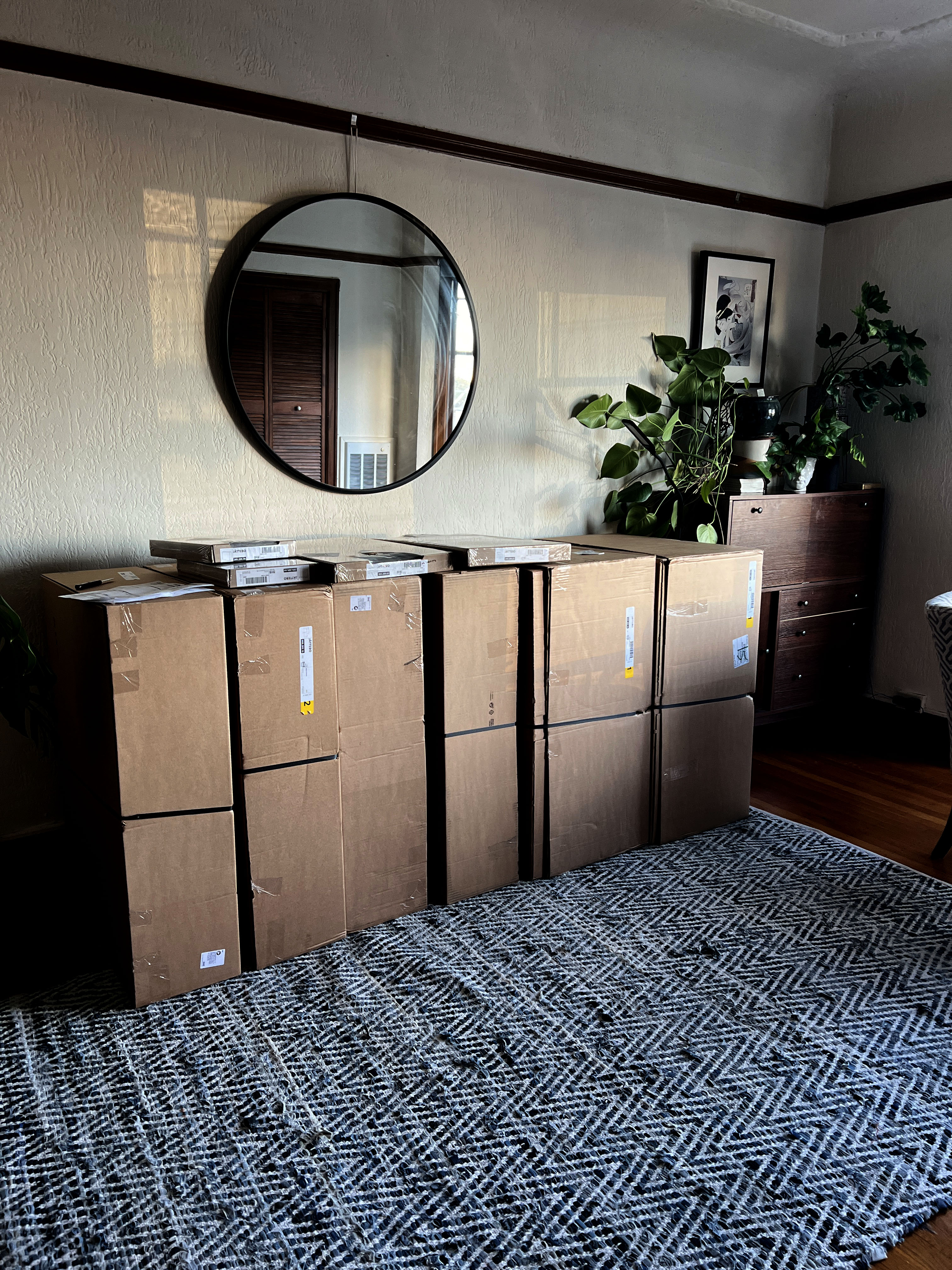
If you're furnishing a home on Maui, chances are you've asked yourself (or Googled at 2 a.m.): Can I just order this from Amazon or IKEA and be done with it?
The honest answer is: sometimes yes — but often not in the way people expect.
This isn't about shaming budget furniture or pretending everyone needs luxury pieces. It's about understanding how island logistics, climate, and long-term costs change the equation.
The Real Issue Isn't Where You Buy — It's How It Gets to the Island
On the mainland, buying furniture online is easy. On Maui, shipping is part of the product whether you like it or not.
Most big-box retailers (Amazon, IKEA, Wayfair, Target, etc.) ship furniture:
- One item at a time
- In oversized packaging
- Without considering island freight efficiency
That means higher per-item shipping costs, longer wait times, and more chances for damage. The problem isn't that the furniture is "bad." It's that the logistics aren't designed for island living.
When Amazon, IKEA, and Big-Box Furniture Can Be Fine
There are absolutely situations where these retailers make sense:
- Budget-driven projects
- Guest rooms, rentals, or temporary housing
- Smaller, lightweight pieces
- Items you're okay replacing sooner
For things like shelving, desks, storage units, or secondary spaces, big-box furniture can be a practical choice — especially when expectations are realistic.
Where People Get Burned
1. Shipping Costs Quietly Erase the Savings
A $300 sofa can quickly turn into a $700–$900 purchase once freight, delivery, and handling are factored in. At that point, the "deal" isn't really a deal anymore.
2. Materials Don't Love Island Conditions
Many big-box pieces rely heavily on:
- MDF and particleboard
- Thin veneers
- Lightweight hardware
Humidity, salt air, and sun exposure can cause swelling, warping, rust, or finish failure much faster than on the mainland. Even if a piece arrives in perfect condition, it may not age well.
3. Returns Are Brutal
Returns from Maui are rarely simple:
- Return freight is expensive
- Some items become non-returnable in practice
- Replacements can take weeks or months
What feels low-risk online becomes high-risk once it's shipped across the ocean.
IKEA Specifically: Should You Still Use It?
Yes — with guidance.
IKEA works best when:
- Used selectively, not as the entire home
- Chosen for modular, low-risk pieces
- Mixed with heavier, better-built anchor furniture
Where IKEA struggles most is with primary sofas, beds, and dining tables that people expect to last 10+ years — especially when shipping costs are high.
Helping a client navigate IKEA thoughtfully (instead of saying no outright) actually builds trust.
So What's the Better Alternative?
The biggest advantage isn't "buying local" or "buying expensive." It's intentional sourcing + consolidated shipping.
That means:
- Grouping items together
- Reducing per-item freight costs
- Choosing pieces that are actually worth shipping
- Avoiding disposable furniture that won't survive island life
This is how hotels, developers, and designers ship — and it's far more efficient for Maui homes too.
The Circular Economy Piece (Even When Shipping In)
Furniture that's better built:
- Can be repaired
- Can be resold
- Can be donated or re-homed
A lot of big-box furniture can't. When it fails, it usually goes straight to the landfill. Choosing fewer, better pieces — even if they come from the mainland — reduces waste and stretches your budget further over time.
A Simple Rule of Thumb
- Small, temporary, budget pieces? Big-box is fine.
- Large, long-term, high-use furniture? Be cautious.
- Anything expensive to ship? Make sure it's worth shipping.
The cheapest option upfront is rarely the cheapest option long-term on the islands.
Final Thought
You don't need to avoid Amazon, IKEA, or big-box stores entirely to furnish a Maui home well. You just need to be more intentional than you would be on the mainland.
The goal isn't perfection — it's fewer headaches, fewer replacements, and furniture that actually makes sense for island living.
If you want help figuring out what's worth buying, what's worth shipping, and where to save vs invest, that's where thoughtful sourcing and coordination really pays off.